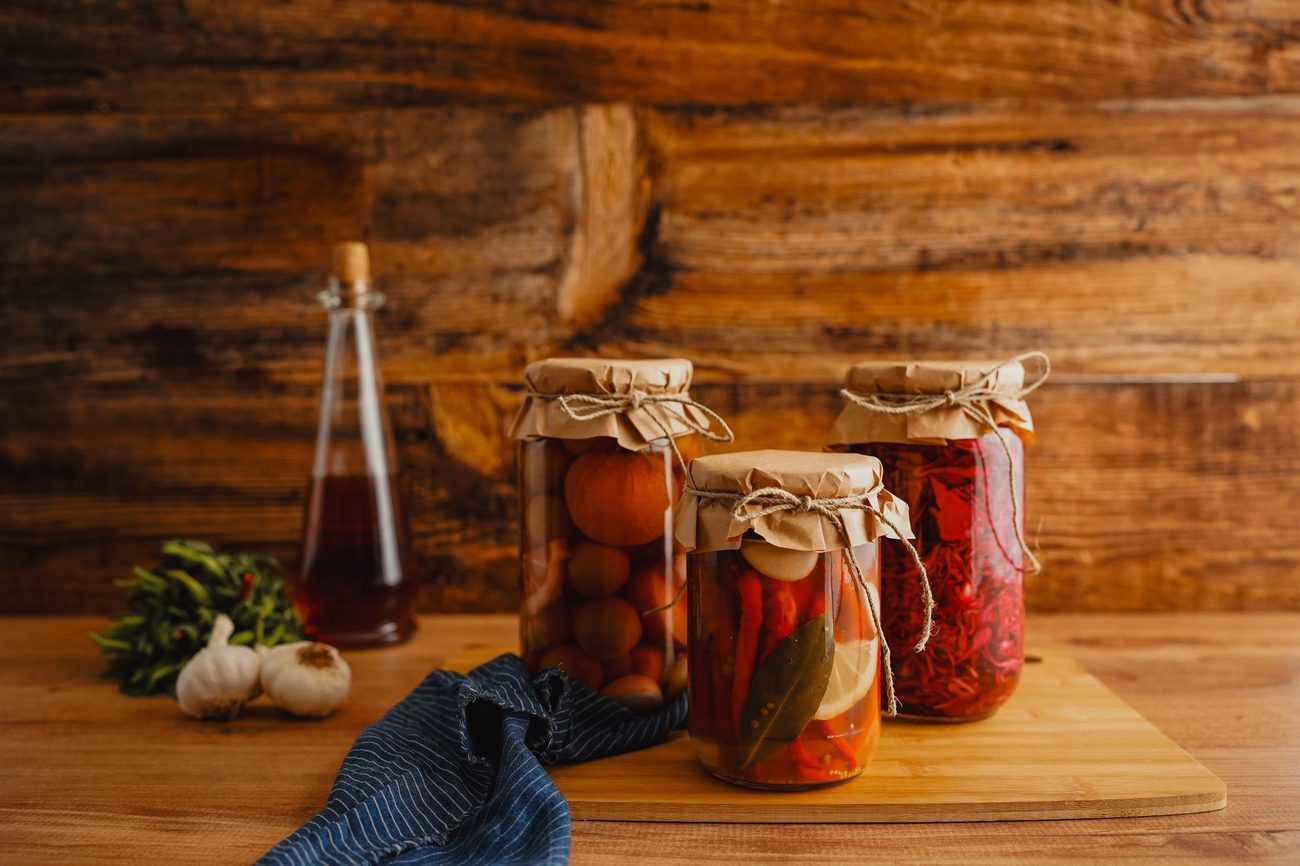
On Labor Day night, nine pint jars sat on a towel on the counter, and between 9:40 and 10:15 eight of them made the little ping. I sat on a stool and listened like I was waiting on test scores. The ninth never pinged.
Labor Day is when I pull the tomato plants. By the first of September ours are spotted and worn out from the heat, and what's left on the vines is a pile of hard green tomatoes that could take weeks to turn, if they ever do. Granny June turned the end of her garden into chow-chow every year, and her card in the red box has a yellow turmeric stain across the bottom: "Chow chow. Green tomatoes, cabbage, onion, peppers. Salt overnight. Vinegar, sugar, mustard seed, turmeric. Pack hot, turn jars over."
About that last line
"Pack hot, turn jars over" is open-kettle canning: hot relish into hot jars, lids on, flip them upside down and trust the seal. Granny did it that way for fifty years. It's no longer considered safe, because the jars never get hot enough for long enough to deal with what can spoil the food, and a lid can seal right over a problem. So my card, filed behind hers, starts with one line in capital letters: FOLLOW A TESTED RECIPE AND ITS PROCESSING TIME. Her ingredients line up with the tested chow-chow recipe in my Ball canning book, so I use its amounts, its vinegar and its timing, and her mustard seed and turmeric come along for the ride.
Here's the why I give my students when we get to food preservation. A boiling-water canner only reaches 212°F, which is enough for high-acid food and not enough for low-acid food. The vinegar is what makes chow-chow high-acid. Use vinegar labeled 5% acidity, and don't cut it back or sneak in extra vegetables, because that changes the acid balance the processing time was tested for.
Ingredients
- 6 cups chopped green tomatoes (about 3 pounds)
- 6 cups chopped green cabbage (about 1 small head)
- 3 cups chopped onions
- 2 cups chopped green bell pepper
- 2 cups chopped red bell pepper
- 2 jalapeños, seeded and minced (optional)
- 1/3 cup canning or pickling salt
- 5 cups cider vinegar, 5% acidity
- 2 1/2 cups sugar
- 2 tablespoons mustard seed
- 1 tablespoon celery seed
- 1 1/2 teaspoons ground turmeric
How I make it
- Toss the vegetables with the salt in your biggest bowl, cover and refrigerate overnight. Drain, rinse once with cold water and drain again, pressing out what you can.
- Set nine clean pint jars in the canner rack, fill the canner with water and bring it to a simmer so the jars stay hot. Wash new lids in warm soapy water.
- Bring the vinegar, sugar, mustard seed, celery seed and turmeric to a boil in a large pot. Add the vegetables, return to a boil, then simmer 10 minutes.
- Ladle the hot relish into the hot jars through a canning funnel, leaving 1/2-inch headspace. Run a plastic bubble tool around the inside, top off if needed and wipe each rim with a clean damp towel. Add lids and screw the bands on fingertip-tight.
- Lower the jars into the canner with at least an inch of water over the tops. When it returns to a full rolling boil, start the timer: 10 minutes for pints in my tested recipe at our elevation, which is under 1,000 feet. If you live higher, add time the way your recipe says.
- Turn off the heat, take the lid off, wait 5 minutes, then lift the jars straight up onto a towel. Leave them alone 12 to 24 hours.
- Check the seals. The center of each lid should be pulled down and shouldn't flex when you press it. Take off the bands, wipe the jars, label them and store them somewhere cool and dark.
Jar nine flexed. When I looked closely there was a sliver of cabbage stuck to the rim, which means I wiped that one in a hurry. An unsealed jar isn't a disaster, it's just a refrigerator jar now. It went straight into the fridge, and we'll eat it first, within a few weeks. Ryan's position is that chow-chow belongs on pinto beans and nowhere else. He's wrong. It's great on a hot dog.
The green tomatoes were free, and the cabbage, onions and peppers from the Columbia farmers market, plus vinegar, sugar, spices and a box of new lids, came to about $21, a little over $2 a pint. I seeded the jalapeños for Nora's sake, and she still calls it "the spicy relish." Eight sealed jars are lined up in the pantry now, which ought to get us to New Year's peas.